Geologic Modelling Oklahoma

Geologic Modelling In Oklahoma

Accurately visualization of your site’s subsurface.

3D Geological Modelling Oklahoma

Seeing the Subsurface in Detail

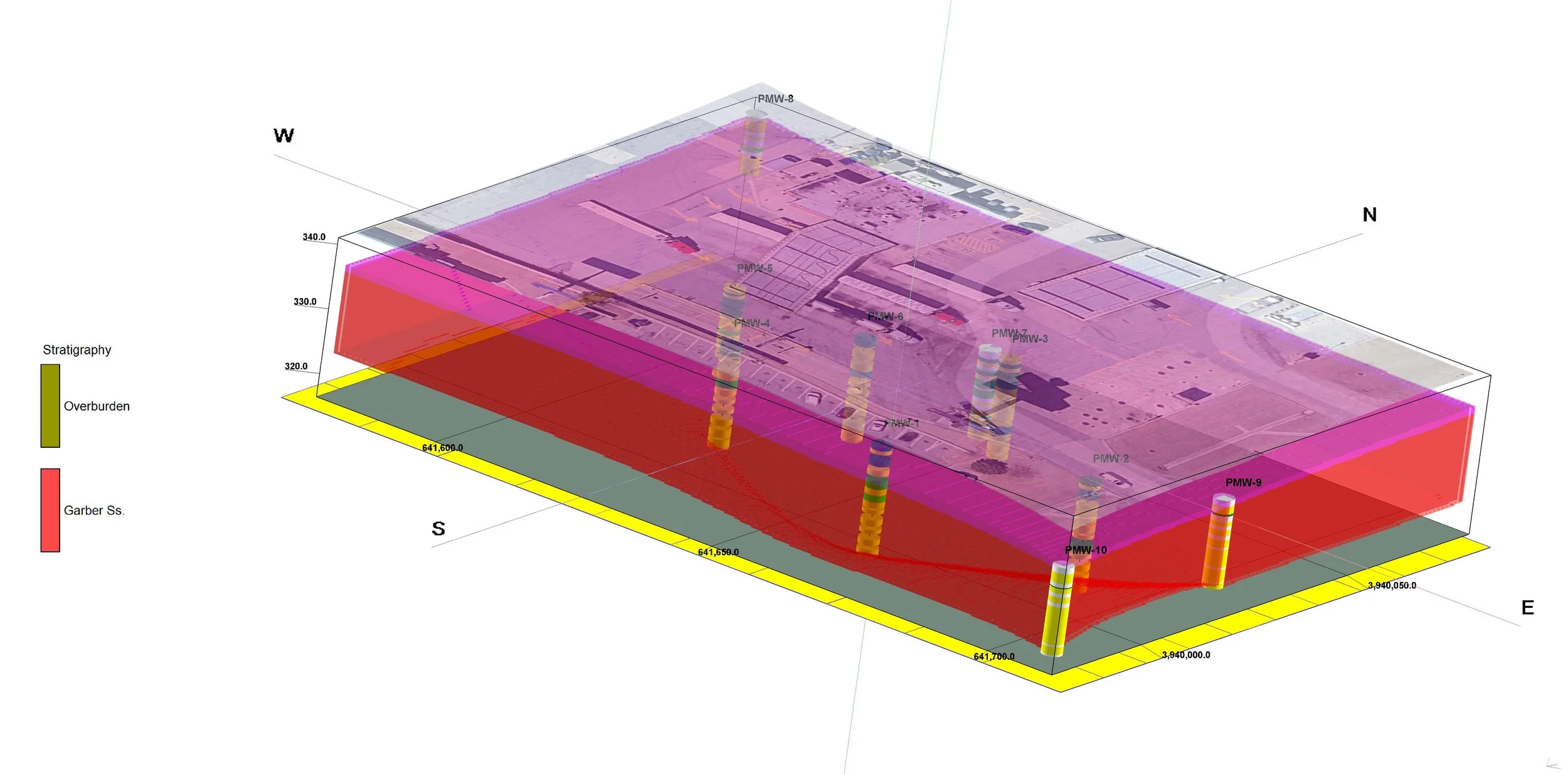
Understanding what lies beneath a contaminated site requires more than a set of boring logs. It requires taking all of the available data and building a coherent picture of how the subsurface is structured. At The Phoenix Group, our geologists use advanced modelling software to create visual representations of subsurface conditions, giving clients and regulators a clear view of what's happening below the surface.

Geological modeling services at The Phoenix Group integrate soil logs, groundwater data, and geophysical survey results to create accurate lithologic cross-sections and plume boundary maps. We incorporate electrical resistivity survey data to confirm how materials change with depth and lateral distance, and we use that information to produce geologic models that reflect the actual conditions at each specific site.

Every geologic model is designed to support something practical. Whether that's a remedial action plan, a regulatory closure report, or a geotechnical evaluation, the model gives everyone involved a common reference point for understanding the site and making decisions. Well-built geologic models reduce uncertainty, focus remediation resources where they're needed, and support faster regulatory review.

Geologic modelling also helps when site conditions are more complicated than they first appeared. Sites with multiple soil layers, discontinuous sand channels, perched water zones, or interfering utility corridors present interpretation challenges that can't be solved with boring logs alone. The model integrates all of the available information and makes the complexity visible in a format that supports sound decisions. That matters especially when you're trying to explain to a regulator why a plume has behaved unexpectedly or why a particular remedial approach is appropriate for this specific subsurface. A well-supported geologic model turns a complicated site into a defensible one.

Our geologists approach every geologic model as a working tool, not just a deliverable. As new data comes in from additional borings, monitoring events, or geophysical surveys, the model gets updated to reflect what's actually happening below the surface.
Show More
YOUR QUESTIONS ANSWERED

FREQUENTLY ASKED Questions

Environmental Remediation Specialist Oklahoma
01
What is geologic modelling and how is it used to support environmental investigation and remediation in Oklahoma?

Geologic modelling is the process of integrating subsurface data from multiple sources into a visual representation of how the earth materials and contamination are distributed below a site. In the context of environmental remediation, it is used to define where contamination is located, how far it has traveled, and what the subsurface structure looks like at the scale of the project. The model informs remediation design, regulatory reporting, and closure planning.

01
What data sources, including soil logs, groundwater data, and geophysical surveys, are integrated into a geologic model?

Our models draw from soil boring logs that describe lithology and contamination by depth, laboratory analytical results from soil and groundwater samples, groundwater level measurements that define the water table and flow gradient, and geophysical data from resistivity surveys and ground-penetrating radar. Each data source fills in a different part of the picture, and the model represents their combined interpretation.

01
What is a lithologic cross-section, and how does it help define the boundaries of a contamination plume?

A lithologic cross-section is a side-view diagram that shows how soil and rock types change with depth along a defined transect across a site. It makes visible the layering, sand channels, clay lenses, and other features that influence how contamination moves. By overlaying contamination data from borings and wells onto the cross-section, we can define the plume boundaries in three dimensions and identify the zones most likely to control migration.

01
How does electrical resistivity survey data improve the accuracy and reliability of a subsurface geologic model?

Electrical resistivity surveys measure how well subsurface materials conduct electrical current, which varies based on soil type, moisture content, and the presence of contaminants. This provides continuous coverage of subsurface conditions between boring locations, filling in the gaps that point-source data from borings cannot capture. Adding resistivity data to a model significantly improves confidence in how lithologic boundaries and plume limits are drawn.

01
What software and tools does The Phoenix Group use to create 3D geologic models of contaminated sites in Oklahoma?

We use professional geological modelling software to build cross-sections, plume maps, and three-dimensional visualizations of subsurface conditions. The specific tools are selected based on the complexity of the site and the needs of the project. All models are produced at a level of detail appropriate for regulatory submittal and are formatted so that agency reviewers and non-technical stakeholders can follow the results.

01
How does a geologic model support regulatory review and site closure decisions with the OCC or DEQ?

Regulators reviewing a corrective action plan or closure request need to understand the site's conditions well enough to evaluate whether the proposed approach or the cleanup results are defensible. A well-documented geologic model provides that foundation. It shows where the contamination is, where it is not, and why the proposed remedy or the confirmed cleanup is appropriate given the site's specific geology and hydrology.

01
How does geologic modelling reduce uncertainty and cost in the remediation planning process?

Uncertainty in remediation planning leads to over-designed systems, unnecessary borings, and extended project timelines. A solid geologic model focuses resources on the areas that matter most and supports confident decisions about where to treat, where to monitor, and when to stop. Sites with thorough geologic characterization typically proceed through investigation and cleanup more efficiently than those where subsurface conditions remain poorly defined throughout the project.

Environmental Services Consultant Oklahoma
Contact Us

We are always happy to help